
There is scarcely a more frustrating, demoralizing experience in personal health than doing everything you were told was “right”—chugging water, spooning dry psyllium husk into water glasses, eating mounds of raw broccoli—only to feel more uncomfortably backed up, heavy, and bloated than before you started.
On online health forums like Reddit r/IBS and gastroenterology consults across the UK, USA, and Canada, thousands of readers write in with the same bewildering symptom: “The more fiber I eat, the worse my constipation gets.” To understand why this happens, we must dismantle the outdated belief that fiber is simply a broom that mechanically sweeps through the intestines.
1. The Motility vs. Bulk Conflict: Adding Traffic to a Blocked Highway
Fiber increases stool bulk. If your underlying issue is a lack of fecal volume, increasing bulk triggers the colon’s natural stretch receptors, initiating peristaltic contractions that advance contents forward. That is the textbook scenario.
However, if your constipation is rooted in slow transit motility (a sluggish migrating motor complex, thyroid slowdown, or pelvic floor dysfunction), adding heavy insoluble roughage is like sending 500 extra tractor-trailers onto a highway that already has a road closure. You do not clear the jam—you create a painful, concrete-like impaction that increases gas, distension, and discomfort.
| Fiber Type | Physical Behavior in Colon | Best Whole Food Sources | Impact on Slow Motility |
|---|---|---|---|
| Insoluble Fiber (Roughage) | Does not dissolve in water; increases rough dry bulk and transit speed only if motility is normal. | Wheat bran, raw kale, raw celery, nut skins, seeds. | Can exacerbate cramps, dry stools, and pelvic floor straining if motility is slow. |
| Soluble Viscous Fiber (Gel-Forming) | Absorbs fluid to form a soft, slippery, lubricating hydrogel. | Chia seeds, rolled oats, peeled sweet potato, brown lentils, peeled zucchini. | Gently lubricates bowel walls, softens hard stool, and moves effortlessly without friction. |
2. The 50mL Osmotic Water Rule: Why Dry Fiber Traps Fluid
Here is the critical clinical detail that standard advice forgets to mention: fiber is hygroscopic. It demands water to fulfill its physiological purpose. For every single 1 gram of supplemental or dense dietary fiber you add to your daily diet, your gastrointestinal lumen requires approximately 50 milliliters of fluid to maintain stool plasticity.
If you increase your fiber from 15g to 35g (+20g of fiber) without adding an extra liter (1,000mL) of fluid and electrolytes, that dry fiber acts like a dehydrated sponge. It draws available water directly out of the surrounding intestinal wall, leaving the stool hard, dry, and stuck. The solution is never “force more dry roughage”—it is restoring osmotic fluidity.
3. The 3 Natural Motility Restorers (Food-First)
If your bowels feel sluggish, pause the harsh roughage and lean into these evidence-based whole-food lubricants:
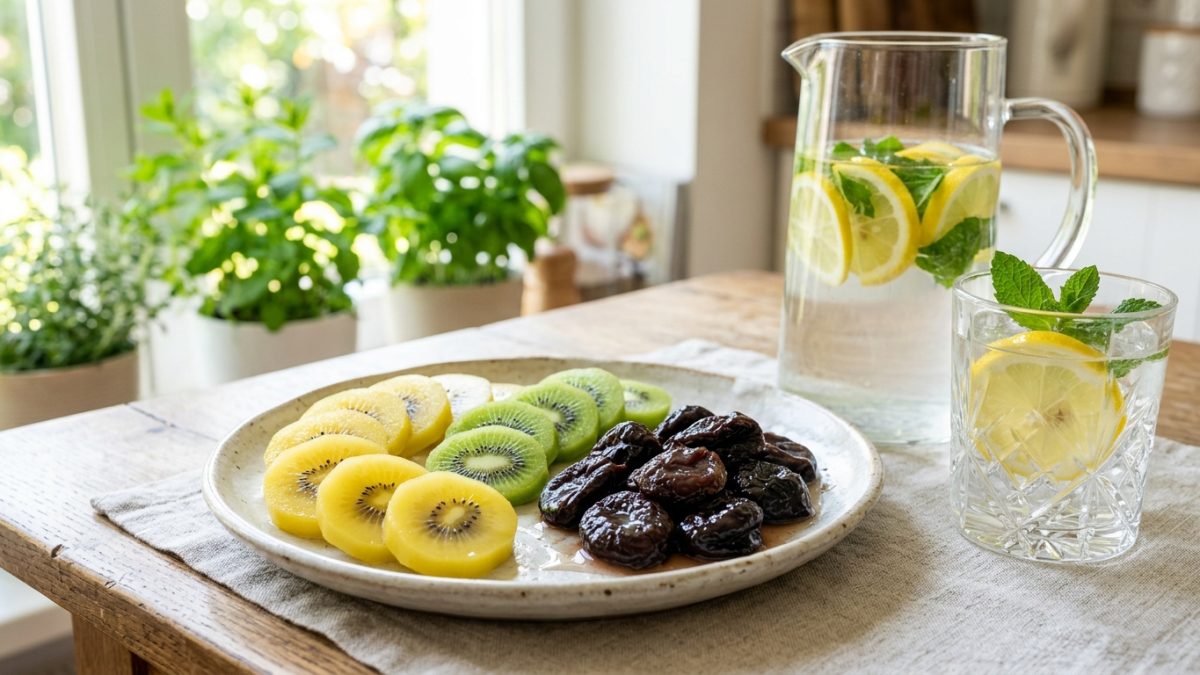
- Golden Kiwifruit (Actinidin Enzyme): Two small kiwifruits daily have been clinically proven in trials published in The American Journal of Gastroenterology to be as effective as pharmaceutical osmotic laxatives, without side effects. Kiwis contain actinidin, a natural proteolytic enzyme, combined with swelling soluble mucilage.
- Stewed Prunes & Warm Lemon Water (Sorbitol Delivery): Prunes deliver concentrated natural sorbitol—a sugar alcohol that draws osmotic water directly into the large bowel, gently stimulating transit without cramping.
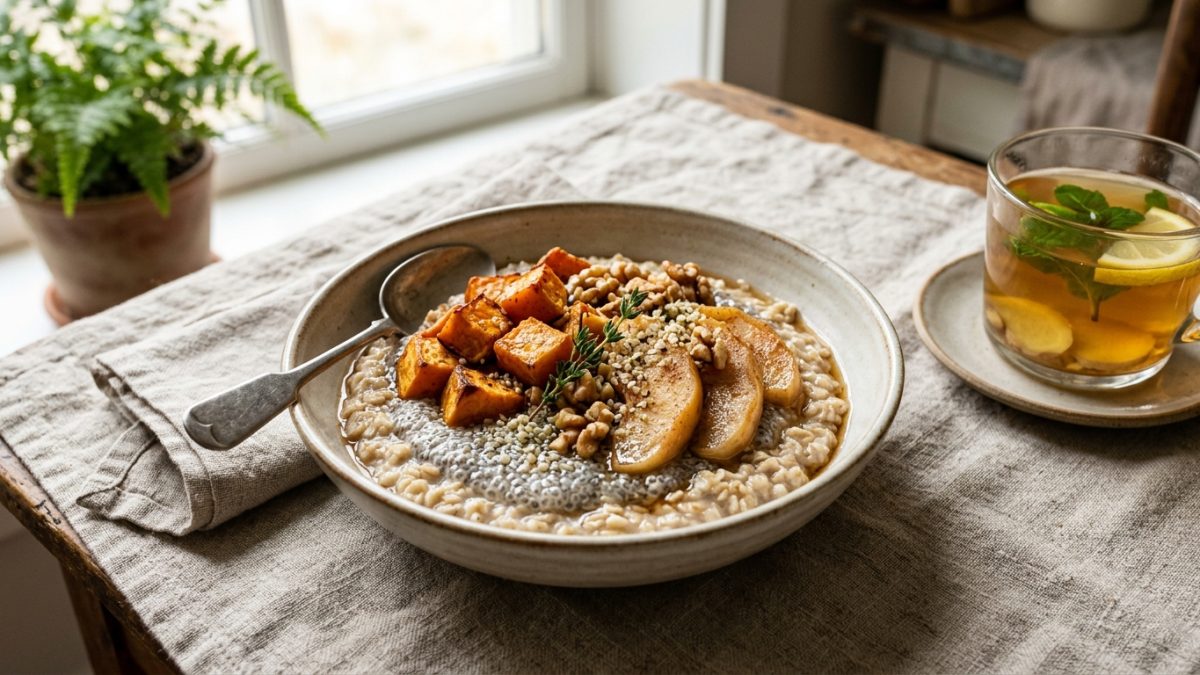
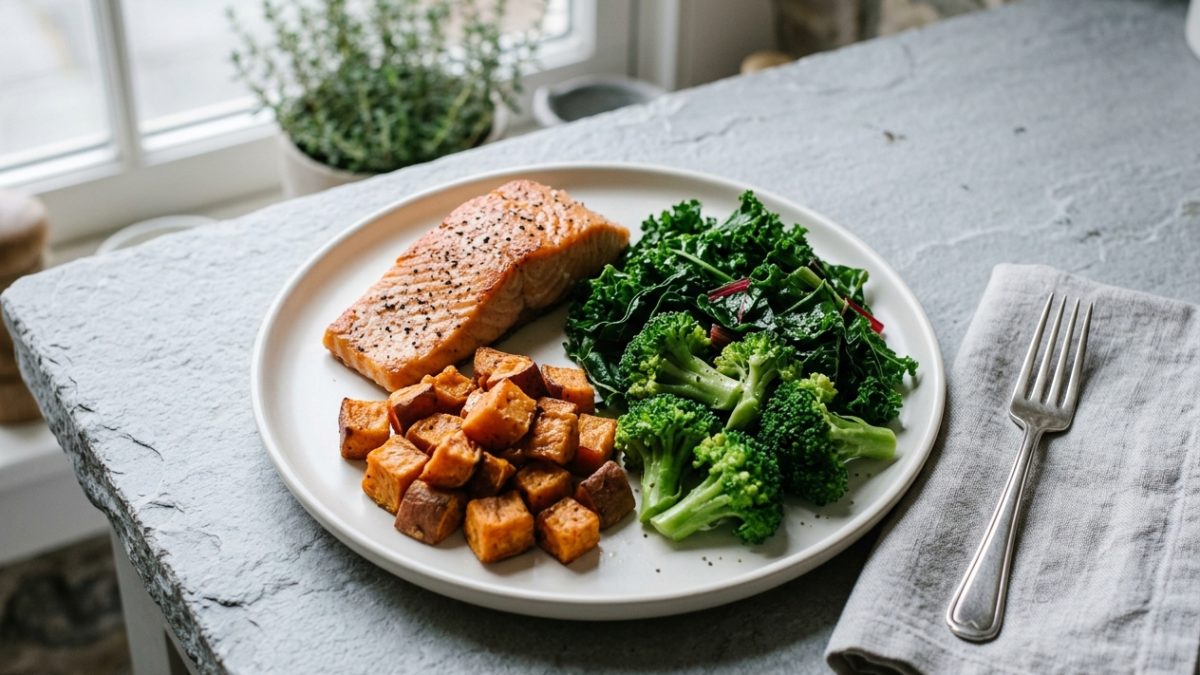
- Peeled Roasted Sweet Potatoes: Rich in gentle, non-irritating soluble pectin and beta-carotene, roasted sweet potato provides soft stool volume without mechanical abrasion.

Leave a Reply